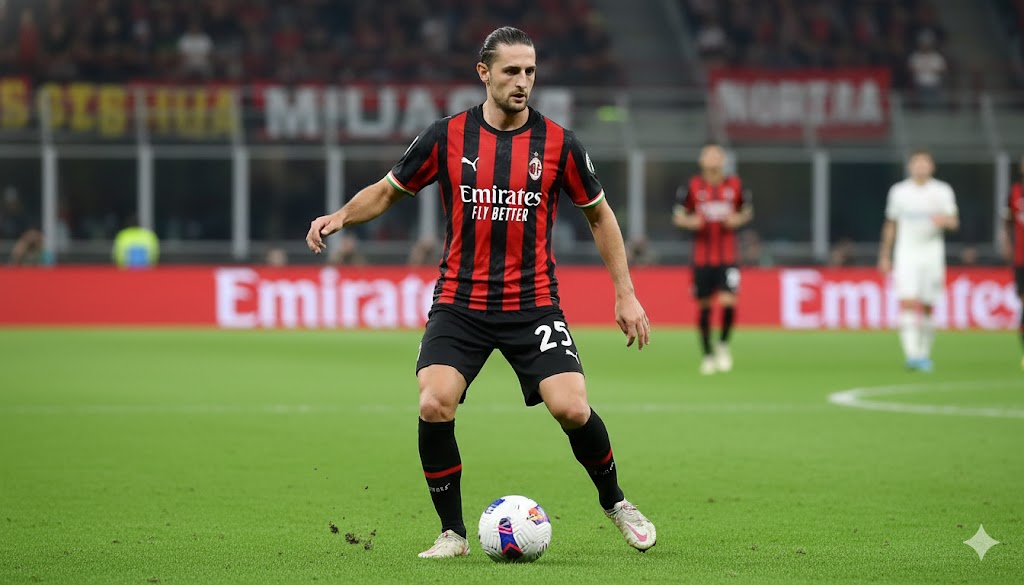

Adrien Rabiot – The Elegant Enigma
1. Introduction: The Profile of an Underrated Maestro
The Playing Style: Box-to-Box Engine
Adrien Rabiot represents a rare breed of modern midfielder—one who combines the defensive solidity of a defensive midfielder with the creative flourishes of an attacking playmaker. At 1.91 meters tall with an imposing physical presence, Rabiot’s primary role is that of a box-to-box engine, capable of covering 10+ kilometers per match while maintaining technical composure. His long, flowing dark curly hair has become as iconic as his left foot, which serves as his primary instrument for range passing, striking opportunities, and set-piece delivery.
What distinguishes Rabiot from conventional box-to-box midfielders is his technical elegance. Unlike purely athletic midfielders who rely on physicality and work rate, Rabiot’s passing accuracy, ball retention under pressure, and ability to transition defense into attack with a single weighted pass elevate him into a category of thoughtful, intelligent midfielders. His weakness—often cited as inconsistency and a perceived arrogance—stems from the same source as his strength: his technical audacity sometimes leads to unforced errors when attempting ambitious passes or dribbles.
The 2026 Context: Resurgence and Leadership
By January 2026, Rabiot has engineered a career resurgence at AC Milan after a brief, turbulent stint at Olympique de Marseille. At 30 years old, he is no longer the young prodigy but rather an experienced leader in Milan’s midfield, mentoring younger players while maintaining the technical standards demanded by one of Italy’s most storied clubs. His role has evolved from that of a primary creator to that of a midfield stabilizer—a presence that anchors Milan’s Champions League ambitions.
For the French national team, Rabiot remains an integral part of Didier Deschamps’ planning as France prepares for the 2026 World Cup qualifiers. His leadership qualities, hard-won through years of navigating high-pressure environments, make him invaluable despite the emergence of younger alternatives.
The “Duke” Persona: Polarizing Brilliance
Nicknamed “The Duke” for his aristocratic bearing and sometimes aloof demeanor, Rabiot has cultivated a reputation as one of football’s most polarizing figures. Media scrutiny—particularly regarding his mother Veronique’s role as his agent and advisor—has colored perceptions of his character. Yet those who have worked closely with him, from Carlo Ancelotti at PSG to Massimiliano Allegri at Juventus, consistently praise his professionalism, tactical intelligence, and resilience under pressure. The polarization is less about his ability and more about his persona: a player who exudes quiet confidence and rarely apologizes for his convictions.
2. Early Life and Youth Development (1995–2010)
Born into Football: Saint-Maurice Roots
Adrien Serifo Rabiot was born on November 3, 1995, in Saint-Maurice, a suburb of Paris located in the Val-de-Marne department. Growing up in this working-class area, Rabiot was exposed to football from an early age—not as an elite prospect, but as a passionate young player drawn to the sport’s technical and tactical dimensions. Unlike many academy products, Rabiot’s early years were not marked by prodigious fame or media attention; instead, they reflected a steady progression through increasingly competitive youth structures.
The Academy Pathway: Créteil and Manchester City
Rabiot’s initial development took place at Créteil-Lusitanos, a French club known for producing technically sound players. However, the turning point came when Manchester City, operating under the early years of Abu Dhabi ownership and aggressive academy expansion, identified the young French prospect and offered him a pathway to English football. From approximately 2008–2010, Rabiot trained within Manchester City’s academy system, an experience that exposed him to English football culture and the club’s meritocratic approach to player development.
The Manchester City experience proved instructive but ultimately brief. While City’s academy was renowned for technical coaching, the club’s domestic dominance was not yet established, and the pathway to first-team football remained uncertain. Rabiot, now a teenager with technical poise and an understanding of elite coaching environments, returned to France—but this time, he arrived at the doorstep of the nation’s most ambitious project: Paris Saint-Germain.
Finding Home at PSG Academy
In 2010, Rabiot joined Paris Saint-Germain’s youth academy at a pivotal moment in the club’s history. PSG was undergoing a transformation following Qatari investment in 2011, and the club’s ambitions extended beyond immediate trophies to building a sustainable academy system capable of producing world-class players. Rabiot’s arrival predated this transformation, but he benefited enormously from the resources, coaching quality, and competitive environment that PSG subsequently developed. Over the next two years, he progressed through the youth ranks, earning recognition for his technical ability, physical presence, and tactical awareness.
By 2012, at age 16, Rabiot was ready for the transition to PSG’s reserve team and, eventually, the professional first team—a trajectory that would define the next chapter of his career.
3. The Paris Saint-Germain Era (2012–2019): The Foundational Years
Historic Debut: The Ancelotti Era
On February 18, 2012, under the management of Carlo Ancelotti, Adrien Rabiot became the youngest player ever to start a Champions League match for Paris Saint-Germain at the age of 16 years and 107 days. This milestone moment, occurring in a Champions League Round of 16 tie against Valencia, signaled that PSG’s ambitious hierarchy viewed Rabiot as a generational talent worthy of immediate exposure to elite competition. Ancelotti’s willingness to deploy such a young player reflected not only Rabiot’s technical ability but also the club’s strategic vision: investing in youth while simultaneously competing for European honors.
The early seasons (2012–2014) were a learning experience. Rabiot oscillated between first-team appearances and loan opportunities, including a formative loan spell at Toulouse during the 2013–14 season, where he accumulated meaningful playing time in Ligue 1. By the time Qatari investment began reshaping PSG’s squad, Rabiot had already proven himself capable of performing at the highest level.
The Midfield General: Alongside Motta and Verratti
During PSG’s period of domestic dominance (2014–2017), Rabiot evolved into a reliable midfield presence alongside world-class operators like Thiago Motta and Marco Verratti. While Verratti was positioned as the creative hub and Motta provided defensive stability, Rabiot occupied the role of the versatile, physically dominant midfielder capable of contributing defensively and offensively. His role was less glamorous than Verratti’s but no less essential—he was the stabilizing presence that allowed Verratti the freedom to create.
Trophy Success: Domestic Dominance
Between 2012 and 2019, Rabiot won four Ligue 1 titles (2013–14, 2014–15, 2015–16, 2016–17), multiple Coupe de France trophies, and several Coupe de la Ligue titles. These accolades reflected PSG’s complete dominance of French football during this period—a dominance that was partly due to superior financial resources but also due to systematic, intelligent squad building. Rabiot’s consistency, professionalism, and technical improvement made him a cornerstone of these successes.
The Contract Dispute: The Fracture (2018–2019)
The fairy tale at Paris ended acrimoniously in 2018–19. As Rabiot entered the final year of his contract, negotiations between the player’s representatives (led by his mother, Veronique Rabiot) and PSG’s hierarchy broke down. The club offered renewal terms that the Rabiot camp deemed insufficient; PSG, in response, adopted a firm negotiating stance. The impasse became increasingly public, with tensions escalating when the club refused to include Rabiot in UEFA’s approved squad list for Champions League matches—a symbolic but profound rejection.
This episode revealed the duality of Rabiot’s career trajectory: on one hand, a talented player capable of thriving at the elite level; on the other, a figure whose off-pitch relationships, particularly with his mother as agent, created friction within institutional structures. The dispute was resolved by Rabiot’s free transfer to Juventus, but the psychological imprint of the PSG departure—the sense of rejection despite his contributions—would shape his subsequent career path. He left Paris with seven years of memories, multiple trophies, and a lingering sense of unfinished business in European competition.
4. The Italian Chapter: Juventus (2019–2024)
The Free Transfer: A Second Chance with Ronaldo
In July 2019, Adrien Rabiot joined Juventus as a free agent—a significant coup for the Turin club. The opportunity to partner with Cristiano Ronaldo, who had recently arrived from Real Madrid, presented Rabiot with a platform to redeem himself after the PSG disappointment. Juventus, under the management of Maurizio Sarri, was constructing a “Sarri-ball” midfield centered on technical passing and positional fluidity. Rabiot’s profile—technical, physically dominant, and capable of both defensive and creative contributions—aligned perfectly with this vision.
The Adaptation Period: Criticism and Redemption
Rabiot’s first season at Juventus (2019–20) was not without criticism. Italian media and fans questioned his consistency, his decision-making in possession, and his apparent lack of urgency in an Italian league unfamiliar with his style. The transition from Ligue 1 to Serie A proved more challenging than anticipated; opponents were more tactically compact, less forgiving of technical inconsistency, and more prepared to exploit physical advantages through pressing and direct play.
However, under Massimiliano Allegri’s subsequent management (from 2021 onward), Rabiot flourished. Allegri’s tactical system, which emphasized positional discipline, pressing triggers, and controlled aggression, suited Rabiot’s strengths. Allegri recognized that Rabiot’s apparent inconsistency often reflected tactical misalignment rather than technical limitation; when properly positioned and given clear tactical instructions, Rabiot proved to be one of Serie A’s most dominant midfielders.
Trophy Success and Personal Peak
During his five seasons at Juventus, Rabiot won the Coppa Italia twice (2021, 2024) and the Serie A title once (2019–20)—achievements that further cemented his status as a winner and a player capable of performing in high-pressure environments. However, it was the 2022–23 season that marked his personal apogee at Juventus. In that campaign, Rabiot became the club’s highest-scoring midfielder with 6 goals in Serie A—an unexpected but revelatory statistic that demonstrated his box-to-box capacity. His passes per 90 minutes, tackle success rate, and progressive passes all registered at elite levels. For one season, the promises of his youth appeared fully realized.
The Decline: Physical Toll and Tactical Shifts
The 2023–24 season witnessed a slight decline. Recurring muscle injuries, accumulated fatigue, and Juventus’s own tactical reorganization under new coaching reduced Rabiot’s influence. By the time Juventus faced the summer of 2024, the club faced a choice: renew the now-aging midfielder or explore alternatives. The decision was made to move on, setting the stage for one of the most unexpected chapters of his career.
5. The Homecoming & Transition: Marseille to Milan (2024–2026)
The Marseille Surprise: A Short French Return
In the summer of 2024, Rabiot signed with Olympique de Marseille in what appeared to be a homecoming narrative: a Frenchman returning to Ligue 1 to play for one of France’s most historic clubs. The signing was met with mixed reactions. While Rabiot’s technical ability was undisputed, French football fans questioned whether a 28-year-old veteran could provide the consistency and durability required for a demanding season. Additionally, the narrative of Rabiot—a player who had spent the previous five seasons in Serie A—returning to Ligue 1 felt somewhat anticlimactic given his previous prominence.
The Marseille experiment lasted only a few months. While the exact details of his departure remain somewhat opaque, the underlying issue was straightforward: Rabiot’s performance and contribution did not meet expectations, and both parties agreed to part ways. The brief stint at the Stade Vélodrome proved to be an interlude rather than a destination.
The AC Milan Transfer: A Strategic Move
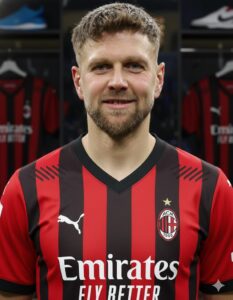
In January 2025, AC Milan made the somewhat surprising decision to acquire Rabiot on a short-term basis (likely through the end of the 2024–25 season with options for extension). For Milan, the acquisition addressed a specific tactical need: the club required a midfielder capable of providing defensive stability, technical composure, and leadership in a compressed title race. Rabiot’s experience—four Serie A campaigns at Juventus, a Champions League finalist appearance with France, and a proven ability to thrive under tactical instruction—made him an ideal short-term solution.
For Rabiot, Milan represented redemption. The club offered him a platform to prove that his Marseille departure was an aberration rather than a sign of decline. Milan’s iconic status, demanding fanbase, and contemporary ambitions in Serie A and the Coppa Italia provided the competitive environment he thrived in.
Current Form and Tactical Integration (2025/26)
As of January 2026, Rabiot has integrated seamlessly into Milan’s midfield. His partnership with younger midfielders, his leadership in the dressing room, and his technical contributions in both possession and transition have proven invaluable. Milan’s approach during the 2025–26 campaign appears to revolve partly around Rabiot’s ability to stabilize the midfield, reduce defensive vulnerability, and provide the veteran composure required during high-pressure matches. Whether Milan pursues a permanent extension or allows Rabiot to depart in the summer remains an open question, but his early form suggests that the 30-year-old still possesses the technical and physical tools to compete at the highest level.
6. International Career: Les Bleus and the Weight of Expectations
Early Career: Building the Resume
Rabiot made his debut for the French national team in 2013, earning his first cap at age 17. Over the subsequent five years (2013–2018), he accumulated meaningful experience at various youth levels (U-17, U-19, U-20, U-21) and gradually worked his way into the senior squad. However, his international trajectory was not as linear as his club career; Didier Deschamps often preferred other midfield options, and Rabiot found himself competing with established figures like Blaise Matuidi, N’Golo Kanté, and Paul Pogba.
The 2018 Controversy: Refusal and Redemption
The pivotal—and most controversial—moment of Rabiot’s international career occurred in 2018. As France prepared for the World Cup in Russia, Deschamps offered Rabiot a place on the “reserve list” rather than the full 23-man squad. This designation, common in football, essentially meant Rabiot would be available only if injuries to other players necessitated his call-up. Rabiot’s response was defiant: he declined the reserve position, publicly stating that he would not accept a peripheral role. This decision, while understandable from a player’s perspective, created a narrative of arrogance and indiscipline that haunted his international reputation for years.
Deschamps, sensitive to challenges to his authority and acutely aware that the 2018 World Cup represented his best opportunity for a major tournament triumph, did not push the matter further. Rabiot was excluded from the squad entirely. France, of course, went on to win the tournament without him—a fact that added a layer of irony and pain to Rabiot’s position.
Euro 2020 and the 2022 World Cup: Redemption
Following the 2018 World Cup disappointment, Rabiot worked to rehabilitate his international standing. When Euro 2020 (held in 2021) arrived, Deschamps selected him as part of the squad. France reached the Euro 2020 final, where they faced Italy. While the tournament saw Rabiot contribute meaningfully, the final defeat to Italy on penalties tempered the positive narrative. His opportunity for genuine redemption came at the 2022 World Cup in Qatar.
At the 2022 World Cup, Rabiot demonstrated why he merited a place in Deschamps’ plans. Playing a vital role in France’s midfield, he contributed both defensively and offensively as the team mounted a serious title challenge. France reached the final, where they faced Argentina. Despite Messi’s brilliance and Argentina’s cohesion, Rabiot was involved in important moments, and his presence provided tactical stability. Though France ultimately lost on penalties, Rabiot’s performance vindicated Deschamps’ faith in him and reestablished his status as a key player for the national team.
The 2026 World Cup Outlook
As of January 2026, Rabiot remains an integral part of Deschamps’ planning for the 2026 World Cup in the United States. Now 30 years old, he is transitioning into the role of a veteran leader and mentor to younger midfielders like Eduardo Camavinga, Aurélien Tchouaméni, and others. Whether he will be a regular starter or a rotational option remains to be determined by his club form and fitness levels. However, his experience, tactical maturity, and proven ability to perform in high-pressure environments ensure that he will remain part of the conversation surrounding France’s World Cup squad.
7. Playing Style & Technical Analysis: The Elegance of Chaos
Physicality: The 1.91m Presence
At 1.91 meters (6’3″), Rabiot possesses a physical presence uncommon among elite midfielders. This height provides distinct advantages: aerial dominance in both defensive situations (winning headers against opposing forwards) and attacking set-pieces (positioning near the opponent’s goal box during corner kicks and free kicks). His physical presence also allows him to shield the ball effectively, using his body to absorb pressure from aggressive opponents while maintaining possession.
However, his physicality is not merely about height. Rabiot’s muscle composition, work ethic, and athletic conditioning allow him to cover approximately 10–11 kilometers per 90 minutes—a distance comparable to elite defensive midfielders. This work rate, combined with his technical ability, creates a rare profile: a physically dominant midfielder capable of sustained pressing, aggressive positioning, and dynamic transitions between defense and attack.
The Left Foot: Technical Gateway
Rabiot’s left foot is his primary instrument and his signature attribute. Using this foot, he delivers:
• Passing range: Diagonals, switches of play, and line-breaking passes that create attacking opportunities
• Set-piece delivery: Both open-play free kicks and corner kick routines that pose aerial threats
• Long-range shooting: Occasional strikes from distance that keep opposing defenses honest
• Dribbling: The ability to carry the ball forward, albeit inconsistently, when tactical situations warrant direct advancement
The accuracy of his left foot is not universal; against high-pressing teams or when fatigued, Rabiot’s passing can become erratic, leading to turnovers in dangerous areas. This inconsistency—technical excellence punctuated by unforced errors—remains his primary limitation and the source of criticism from observers focused on quantitative metrics.
Tactical Versatility: Positional Flexibility
Throughout his career, Rabiot has been deployed in multiple midfield roles:
• Box-to-Box (#8): His primary position, balancing defensive and attacking responsibilities
• Defensive Midfielder (#6): In specific tactical setups, particularly under Allegri at Juventus, Rabiot moved deeper to provide defensive cover
• Wide Midfielder: Occasionally deployed on the left wing in situations requiring midfield width and forward runs
• Advanced Midfielder (#10): In rare circumstances, when tactical flexibility demanded an additional attacker
This versatility—while sometimes reflecting a lack of positional specialization—also demonstrates tactical intelligence and the ability to adapt to managerial demands. Managers appreciate players who can fill multiple roles; Rabiot’s profile allows them to experiment with different tactical arrangements without sacrificing midfield quality.
8. Personal Life & Influences: The Role of Veronique Rabiot
The Mother-Agent Dynamic: Veronique Rabiot’s Influence
Adrien Rabiot‘s career cannot be comprehensively analyzed without addressing his mother, Veronique Rabiot, who serves as his agent and principal advisor. This arrangement is not unique in modern football—other elite players have family members in management roles—but it is relatively uncommon and often subject to intense scrutiny. The PSG contract dispute (2018–19) placed Veronique’s role under particular examination, with critics arguing that her negotiating stance prioritized financial interests over institutional relationships.
A more nuanced interpretation suggests that Veronique has been a stabilizing force in Adrien’s career, protecting his interests, ensuring fair compensation, and advising him during pivotal transitions. Whether one views her influence as protective or controlling often depends on one’s perspective regarding player agency and family involvement in professional careers. What is undeniable is that Veronique’s presence has shaped the trajectory of Adrien’s career decisions, particularly during moments of significant change (the Manchester City loan, the PSG departure, the Marseille exit).
Off-Pitch Profile: Private Discipline
Rabiot maintains a relatively private personal life, distinct from the media-saturated existence of some contemporary football stars. He is known among teammates for professionalism, discipline in training, and a commitment to physical conditioning. This off-pitch comportment contrasts with the on-pitch persona of technical audacity and occasional recklessness; the duality suggests a player acutely aware of the standards required to compete at the elite level and committed to maintaining those standards through professional habits.
Unlike some football personalities who cultivate extensive social media presences or pursue endorsement opportunities aggressively, Rabiot’s public profile remains comparatively understated. This approach—sometimes perceived as aloof or arrogant—reflects a deliberate choice to separate personal and professional spheres and to prioritize football over celebrity.
9. Career Timeline: A Quick Reference
| Year/Period | Club/Event | Milestone or Notable Achievement |
|---|---|---|
| 2012 | Paris Saint-Germain | Professional debut; youngest PSG player to start a Champions League match (age 16) |
| 2013 | Toulouse (Loan) | Loan spell for competitive playing time in Ligue 1 |
| 2013–2019 | Paris Saint-Germain | 4× Ligue 1 titles; multiple Coupe de France wins; Champions League finalist (2020 final in 2021) |
| 2018 | France National Team | Controversy: declined reserve list position for 2018 World Cup; excluded from squad |
| 2019 | Juventus | Free transfer to Turin; begins Italian chapter alongside Cristiano Ronaldo |
| 2019–2024 | Juventus | 1× Serie A title (2019–20); 2× Coppa Italia wins (2021, 2024); personal peak in 2022–23 season |
| 2020–2021 | France National Team | Euro 2020 finalist; redemption after 2018 World Cup exclusion |
| 2022 | France National Team | World Cup finalist in Qatar; key player in France’s midfield; vindication and redemption |
| 2024 | Olympique de Marseille | Short-lived French return; brief stint lasting only months |
| January 2025–Present | AC Milan | Transfer to Serie A club; veteran leadership role; integration into midfield; 2025/26 title race involvement |
10. Conclusion: The Legacy of a Modern Midfielder
The Enduring Impact
Adrien Rabiot‘s career defies simple categorization. He is neither a defensive midfielder nor a playmaker, neither a pure athlete nor a technical virtuoso—he is an amalgamation of competing qualities, sometimes harmonious and sometimes contradictory. His achievements—multiple Ligue 1 titles, a Serie A championship, a World Cup final appearance, and a Juventus tenure spanning five seasons—speak to a player of substance and resilience. Yet his career has been marked by moments of disappointment (the PSG departure, the 2018 World Cup exclusion, the Marseille interlude) that suggest an inability to fully capitalize on his potential or maintain consistency across all environments.
As Rabiot enters the final years of his professional career at age 30, the question of legacy becomes increasingly relevant. Will he be remembered as a talented but inconsistent midfielder who never quite reached the elite tier of players who dominated his era? Or will his final years—potentially at AC Milan and with France—provide the capstone to a career that ultimately validates his technical ability and competitive ambitions?
What is undeniable is that Rabiot has thrived under pressure despite media scrutiny and institutional friction. His willingness to move clubs, adapt to different tactical systems, and perform at multiple elite institutions demonstrates a resilience and professionalism that separate him from those whose careers derail due to external circumstances. The “Duke” persona—aloof, confident, technically audacious—may frustrate purists and statisticians, but it has also allowed him to survive and compete in an era of increasing tactical complexity and physical demands.
The Milan chapter, beginning in January 2025, represents either a final flourish or a graceful denouement. Either way, Adrien Rabiot has secured his place in football history as one of the generation’s most polarizing yet undeniably talented box-to-box midfielders—a player whose legacy will be debated long after his final whistle.